Moderation that protects the people it listens to
:/ mod is the spam and manipulation guardrail of the Open Listening Block. It keeps scams, coordinated campaigns, and unsafe advice out of farmer feedback while leaving criticism, protest, and satire alone.
Dissent is not spam. The hard part of moderation is knowing the difference.
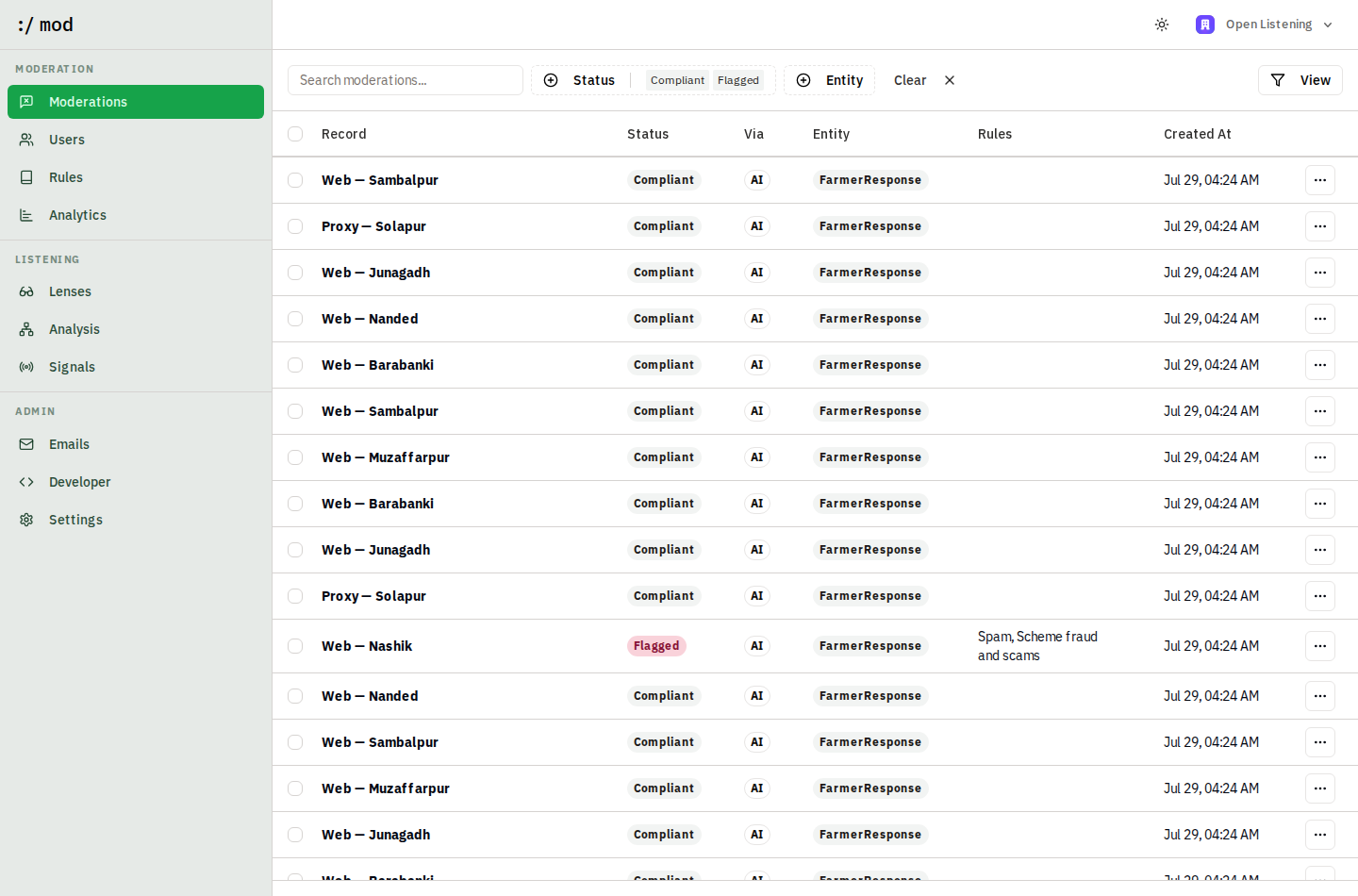
“Your subsidy of Rs 25,000 is approved. Pay a Rs 500 processing fee and share the OTP to release it.”
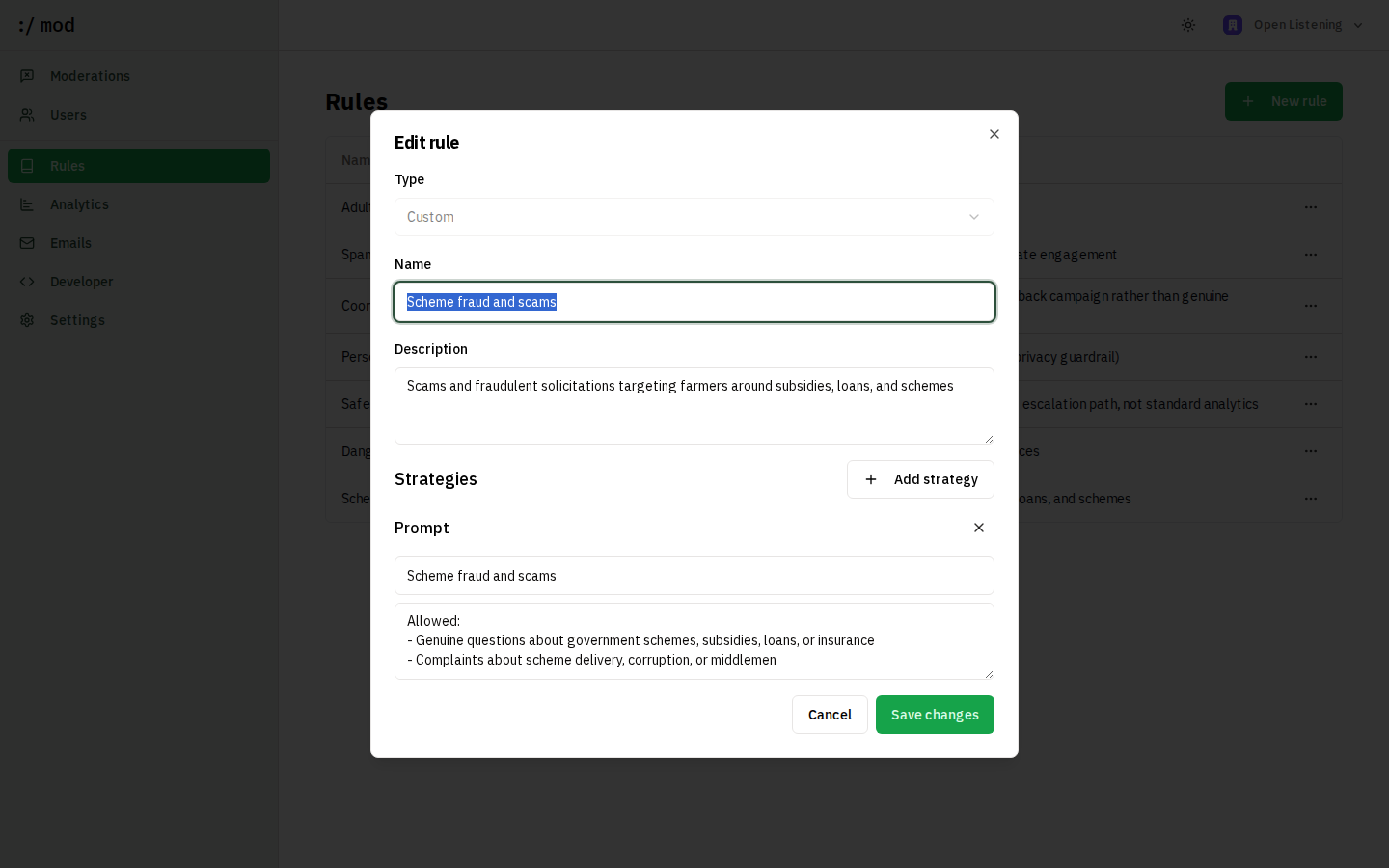
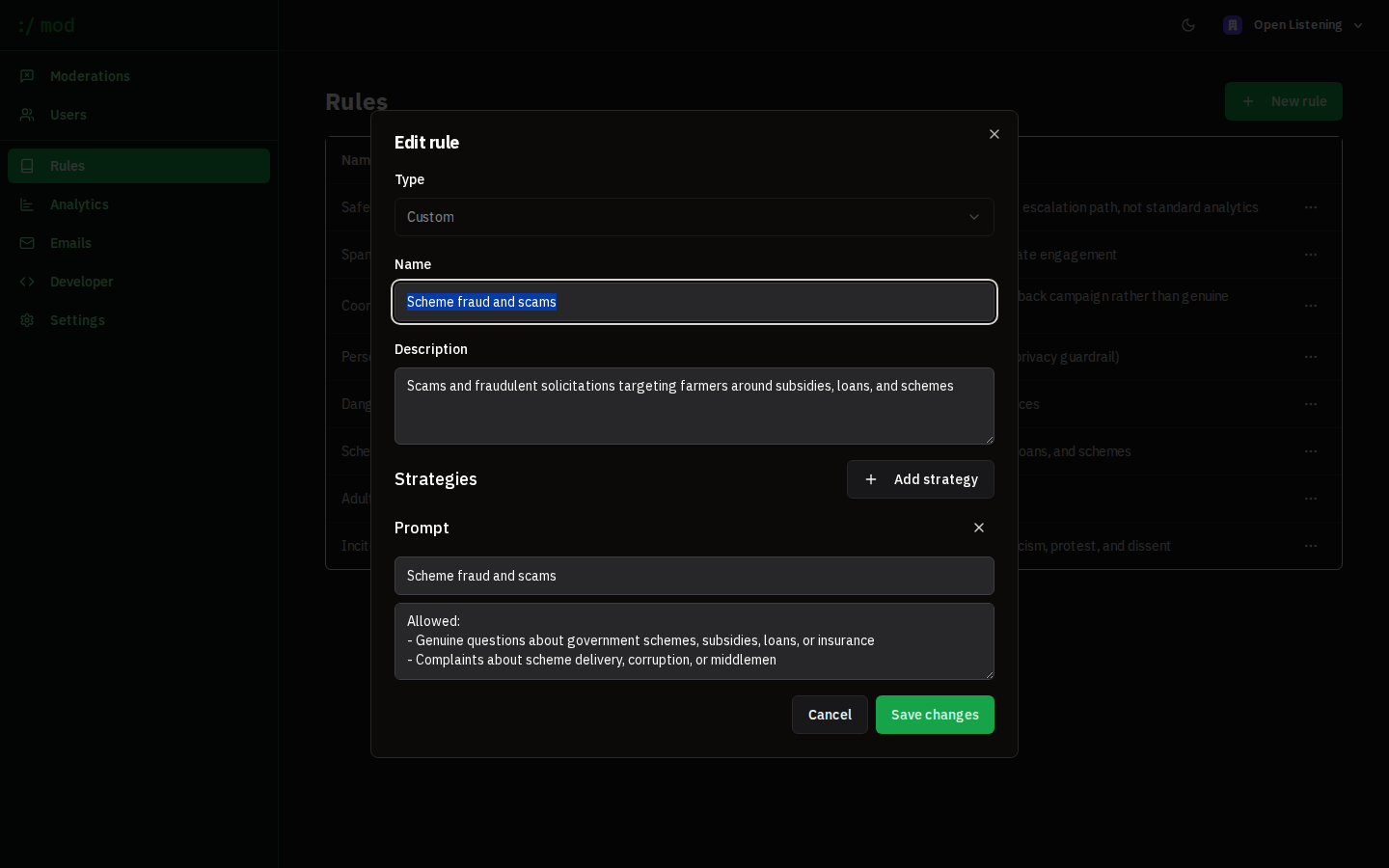
Scheme fraud and scams
“This government has betrayed farmers. The minister is a liar and we will make sure they lose every rural seat.”
Angry, but lawful criticism — and a listening tool must hear it
A 99-item civic-speech eval covering satire, protest calls, constitutional action, published journalism, and coded incitement runs against every change to the taxonomy.
The whole moderation lifecycle, so an instance doesn't rebuild it.
Programmable taxonomy
Categories are plain-language rules you write, edit, and version in the dashboard or over the API. Nothing is hard-wired, so each instance brings its own taxonomy.
Quarantine, not delete
Flagged responses wait for a human. Reviewers restore genuine content, override the AI, and every decision keeps its reasoning and rule attribution for the record.
Multilingual by default
Rules written in English judge native-script content directly across 12 Indian languages, with language detected automatically at ingest.
Identifiers removed at entry
Optional redaction strips Aadhaar, PAN, phone, bank, and UPI details before the record is written, so plaintext never reaches storage or analytics.
Bring your own model
Point it at OpenAI or any OpenAI-compatible endpoint — vLLM, LiteLLM, Ollama — per organization, so moderation can run entirely on your own infrastructure.
Appeals and escalation
Suspended users can appeal through a hosted form into a reviewer inbox, and safeguarding concerns route to people rather than sitting in a queue.